Entrepreneurs are always on the move. From back-to-back Zoom calls to client meetings and strategy sessions,…
How To Reduce Long Periods Of Sitting While Working
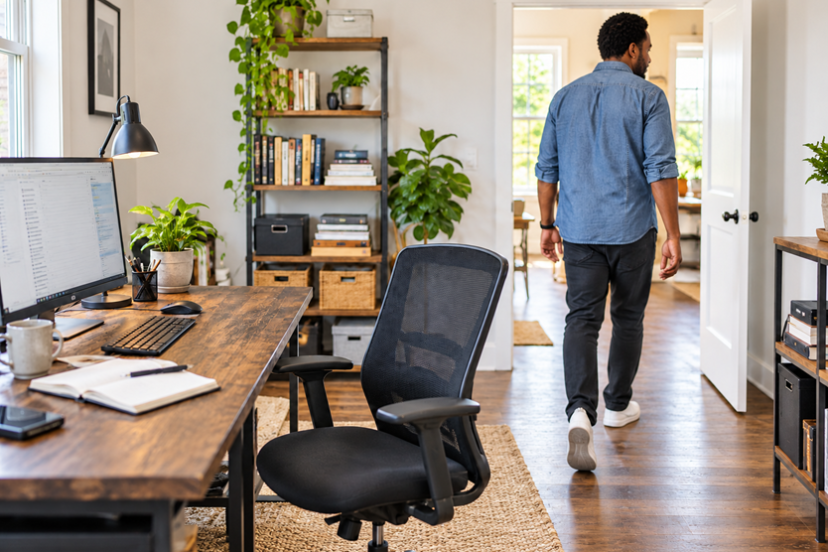
To reduce long periods of sitting while working, build brief opportunities to move into the tasks you already do. Step away between work blocks, leave room between calls, and identify activities that do not require a chair. For entrepreneurs, the most useful starting point is a workday that makes movement easy to remember and repeat, even when business gets busy.
It is easy for a one-person business owner to sit down to answer a few messages and remain there through invoicing, content editing, and a client call. Each task feels separate, but your body has stayed in the same place. By the time you notice, much of the morning has passed.
That makes prolonged sitting partly a workflow issue. When every responsibility happens at one screen, changing tasks does not automatically create a change in position.
Notice Where Separate Tasks Become One Long Seated Session
Start by noticing which parts of your day keep you in your chair without a natural stopping point. You do not need a tracking app or a detailed activity log. A rough picture of an ordinary workday is enough to reveal useful opportunities.
Perhaps you move around while preparing customer orders but stay seated throughout marketing work. Maybe client appointments have clear endings, yet you fill every gap with email. Or you take a lunch break but spend it scrolling at the same desk.
The practical question is: Where does my workday let several seated activities run together?
This matters because a reminder to “move more” gives you no specific moment to act. Recognizing that you regularly go straight from a proposal into bookkeeping gives you a place to insert a break.
A Workout And A Movement Break Serve Different Purposes
Regular exercise matters, but it does not turn a long seated workday into an active one. NHS guidance encourages both physical activity and reducing time spent sitting. You can keep your exercise routine while also changing how you spend the hours between workouts.
A brief walk away from your desk does not need to become a fitness session. It can simply interrupt a stretch of sitting. Keeping that distinction clear makes the habit easier to fit into a busy business day.
Give Movement A Place In The Workflow
Choose an existing work event as a cue to step away. The cue should happen often enough to be useful and be easy to recognize.
Examples include:
- Finishing a scheduled block of writing or administrative work.
- Ending a client call before opening your inbox.
- Completing a batch of invoices or customer replies.
- Returning from lunch before starting the next screen-based task.
Choose one or two cues to begin with. Trying to attach a new rule to every activity can make a simple change feel like another system to manage.
Use A Reminder When Tasks Have No Clear Ending
Some work expands to fill whatever time is available. Research, editing, and website troubleshooting may not produce a convenient stopping point.
A timer or calendar reminder can provide a cue when the task itself does not. Set it around a manageable work block and decide beforehand what you will do when it appears: save your work, leave yourself a short note, and step away briefly.
There is no need to present one interval as the correct schedule for everyone. HSE guidance favors short, frequent breaks from display-screen work and notes that timing depends on the work being done.
If reminders repeatedly arrive in the middle of calls, adjust their placement. If you dismiss every reminder until the project is finished, give the work block a clearer boundary.
Match The Break To The Task
Some activities allow movement; others deserve your full attention at a stable workstation.
An audio-only conversation may allow an easy walk in a clear, private area when you do not need to read, type, or take detailed notes. A financial reconciliation, design revision, or screen-sharing presentation may be better handled while seated.
You do not need to make every task mobile. The opportunity may be just before or after the task.
For example, a consultant might leave a small gap between appointments, finish the call notes, then walk away from the desk before the next meeting. A store owner might alternate computer administration with a light inventory check when that sequence fits the actual workload.
Avoid inventing busywork just to stay on your feet. A brief break is a valid use of the gap; it does not need to produce another business output.
Make It Easy To Resume Concentrated Work
Breaking concentration can feel costly when you finally understand a difficult problem. Before leaving the desk, record the next small action: which paragraph needs revising, which figure needs checking, or which customer request comes next.
That note gives you a return point. It also reduces the temptation to keep working because you are afraid of losing your place.
Treat this as a practical experiment. The aim is to find repeatable pauses that fit the work, without assuming they will automatically improve productivity.
Adjust The Room Before Buying Equipment
Look at whether your workspace makes movement awkward. A chair hemmed in by storage boxes, cables across the floor, or a crowded route to the door can turn a quick break into a nuisance.
Start with a clear route away from the desk. Keep the setup easy to leave and return to. If an existing suitable surface allows an occasional standing task, consider whether that task genuinely fits there.
A standing desk may provide another working position, but buying one does not create a movement habit. Standing in one place for long stretches also leaves little variety in the workday.
Before purchasing equipment, identify the problem it would solve. Would it make a specific task easier to vary, or would the same uninterrupted work pattern continue at a different height?
Avoid balancing a laptop on an unstable stack or adopting a setup that forces you to hunch. Equipment should support the work and fit the person using it.
Watch For Breaks That Keep You In The Same Position
A break from business work is not necessarily a break from sitting.
Switching from your laptop to your phone, eating at the keyboard, or watching a training video in the same chair may change what you are doing while leaving the sitting pattern intact.
Other habits can undermine the plan:
- Scheduling calls with no room to step away.
- Waiting until the entire to-do list is finished.
- Saving every movement opportunity for the end of the day.
- Turning each break into a demanding exercise routine that feels hard to start.
These patterns do not mean you lack discipline. They suggest that the break needs a more realistic place in the day.
Movement should also fit your abilities and circumstances. If pain, dizziness, a health condition, or a mobility limitation affects what you can comfortably do, ask a qualified healthcare professional about appropriate options. Standing and walking are not suitable defaults for everyone.
Start With The Stretch Of Sitting You Most Often Overlook
Choose one part of the day that regularly becomes a long seated session. Add a clear cue and a simple response, such as stepping away after your morning administrative block.
After trying it across several ordinary workdays, consider whether you actually used the break, whether returning to work was manageable, and what caused you to skip it. Adjust the cue or the workload around it before adding more rules.
For a busy entrepreneur, the useful change is one that survives an ordinary day of deadlines and interruptions. Give movement a specific place in that day, then build from the opportunities you can repeat.

More to Explore