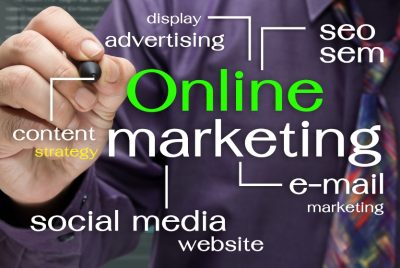
As the digital age progresses, it’s important to stay ahead of the game with your business…
How To Connect Your Website, Email, And Social Marketing

Connecting your website, email, and social marketing does not require turning them into one complicated system. The practical goal is to give each channel a clear job and make it easy for people to move from one to another. Your website can provide a stable destination, email can support ongoing follow-up, and social media can help people discover and re-engage with your business.
The problem begins when these channels are treated as unrelated marketing activities. A business owner may publish social posts, update a website, and send occasional emails, yet none of those efforts guide people toward the next useful step.
That can create plenty of marketing activity without much continuity.
The better approach is to think less about managing three separate platforms and more about creating one connected path for the people you want to reach.
Each Channel Should Have A Different Job
Your website, email list, and social accounts do not need to perform the same function.
In fact, trying to make every channel do everything can create unnecessary work.
A website is typically the most stable place to explain your business, offers, expertise, resources, or next steps. It gives people somewhere to go when they want more information than a social post can reasonably provide.
Email gives you a way to continue communicating with people who have chosen to hear from you. Instead of depending on someone remembering to visit your website again, you can bring useful information back to them over time.
Social media is often better suited to discovery, conversation, visibility, and repeated exposure. It can introduce an idea, answer a narrow question, highlight a resource, or remind someone that your business exists.
The channels become more useful when their roles complement one another rather than compete.
Connection Matters More Than Being Everywhere
It is easy for entrepreneurs to assume that connecting their marketing means adding more platforms.
Usually, that creates the opposite problem.
You might have a website that receives occasional updates, an email list that rarely hears from you, and accounts on several social networks that require constant attention. Each additional channel creates another place to create content, monitor responses, and maintain consistency.
A connected marketing system does not depend on having the largest possible collection of platforms.
It depends on whether the channels you already use lead somewhere useful.
For example, a social post could introduce a problem your audience recognizes and point interested readers toward a more complete article on your website. That article could offer an appropriate opportunity to join your email list. Future emails could then bring subscribers back to other useful resources, offers, or updates on your site.
The exact path will vary by business, but the principle remains the same: one marketing activity should make the next useful interaction easier.
Your Website Can Act As The Stable Center
Social platforms and email tools can be valuable, but your website can provide a central place where your marketing efforts come together.
That does not mean every business needs a large or complicated website.
It means that when someone wants to understand what you do, explore your resources, evaluate an offer, contact you, or take another meaningful step, there should be a clear destination.
This is particularly useful when your social content covers many small topics. Instead of trying to explain everything inside individual posts, those posts can lead interested people toward deeper website content.
The same applies to email.
An email does not always need to contain every detail. It can introduce an idea, explain why it matters, and direct readers toward a relevant page when additional information would be useful.
That gives the website an ongoing role rather than allowing it to become a static brochure that rarely interacts with the rest of your marketing.
Email Provides Continuity Between Visits
A website can be useful without automatically bringing people back.
Someone may find an article, read it, and leave with no reason to return soon.
Email can help bridge that gap.
When readers voluntarily join your list, you have an opportunity to continue the relationship through useful communication rather than relying entirely on another search, social post, or chance visit.
For a one-person business, this can also make content work harder.
A useful website article might later become the subject of an email. The email can highlight one lesson from the article instead of reproducing the entire piece. A social post can then introduce another part of the same subject.
The purpose is not to copy identical material everywhere.
It is to let one useful idea appear in formats that fit the role of each channel.
That can reduce the pressure to invent completely unrelated marketing content every time you publish.
Social Media Can Create Entry Points
Social marketing becomes easier to evaluate when you stop expecting every post to produce an immediate sale.
A social post can serve a smaller purpose.
It might introduce your business to someone who has never encountered it before. It might bring a previous visitor back to a useful resource. It could reinforce an idea that a subscriber has already encountered through email.
That means social media can function as a collection of entry points into a broader marketing system.
The important question becomes: where should an interested person go next?
Sometimes the appropriate next step is simply another useful post. In other cases, it may be an article, service page, product page, signup page, video, or other resource.
Not every social interaction needs a link or a call to action. Constantly pushing people away from a platform can make your content feel transactional.
But when there is a natural next step, your other marketing assets should be easy to find.
Reusing A Core Idea Is Different From Repeating Yourself
One reason website, email, and social marketing become disconnected is the belief that every channel needs entirely original material.
That can become difficult to maintain, especially for a solopreneur or small business with limited time.
A more manageable approach is to start with a useful subject and adapt it according to the purpose of each channel.
Suppose you publish a website article addressing a recurring customer question.
An email could focus on the one misunderstanding from that article that readers should recognize.
A social post could highlight a single observation or decision point from the same subject.
Another social post might approach the topic through a short example.
Later, an email could point readers toward a related article.
The material is connected without being identical.
This kind of reuse can create consistency because your audience encounters related ideas instead of a random series of unrelated marketing messages.
Watch For Broken Paths Between Channels
A business can have an active website, email list, and social presence and still have weak connections between them.
A few common patterns make the problem visible.
A social account may publish useful posts but give interested people no obvious way to learn more about the business.
A website may attract readers but provide no reasonable opportunity for those readers to stay connected.
An email newsletter may regularly send readers to third-party platforms while rarely directing attention toward the business’s own useful resources.
Another common issue is conflicting messaging. The website may emphasize one type of customer, social content may speak to another, and email messages may promote several unrelated offers.
The individual channels may be functioning, but the overall path feels fragmented.
Connecting the channels therefore involves more than adding links. The audience, message, and next step should also make sense from one interaction to the next.
Do Not Automate A Confusing Journey
Marketing tools can make it easier to schedule posts, send email sequences, publish content, and connect different parts of a workflow.
Automation can save time when the underlying path is already clear.
It can also reproduce confusion more efficiently.
Before adding more automation, it helps to understand what you actually want someone to do after encountering your marketing.
Where might they first discover you?
Where can they learn more?
Is there a sensible reason to join your email list?
What should subscribers receive after they join?
Where should email readers go when they want deeper information or are ready to consider an offer?
Those questions are more important than connecting every available tool.
A simple path that you understand and maintain consistently can be more useful than an elaborate collection of integrations that adds work without improving the customer experience.
The System Should Fit Your Capacity
There is no single correct combination of website, email, and social marketing for every entrepreneur.
A service provider may use social media primarily for visibility while the website handles service information and email maintains contact with prospects or past customers.
A publisher might rely heavily on website articles, use email to distribute new resources, and use social channels to introduce those resources to additional readers.
An online business with a small audience may use only one social platform instead of attempting to maintain several.
The important consideration is whether the system fits the business’s available time, audience, offer, and ability to produce useful material consistently.
Adding another channel should solve a recognizable marketing need, not simply create another obligation.
Build A Path, Not A Collection Of Platforms
Website, email, and social marketing become more useful when they support one another.
Your website can provide a dependable destination. Email can maintain communication with people who want to stay connected. Social media can create additional opportunities for discovery and engagement.
The goal is not to force every person through an identical funnel or make every marketing activity lead immediately to a sale.
It is to remove unnecessary dead ends.
When someone encounters your business in one place, they should have a sensible way to continue when they are interested in learning more.
For a small business or one-person operation, that may be the most practical definition of connected marketing: fewer isolated activities, clearer roles for each channel, and a customer journey that makes sense from one interaction to the next.

More to Explore