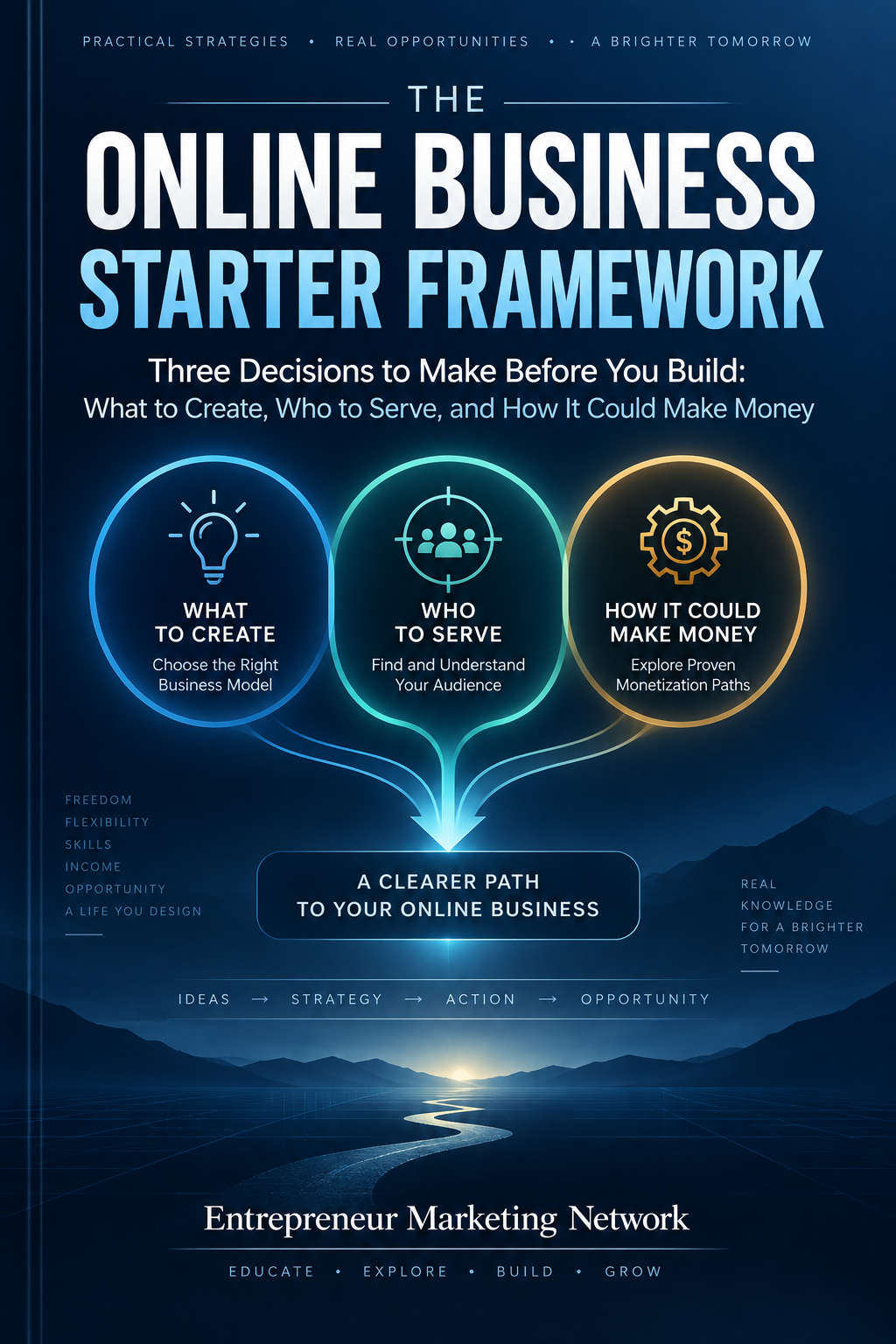
Attracting website visitors who fit your offer starts with matching three things: the people you want…
How To Drive Website Traffic In The Age Of AI Search

Driving website traffic in the age of AI search means making your content useful both to people who visit your pages and to search experiences that may summarize information before anyone clicks. The practical response is not to abandon search optimization, but to publish distinct, trustworthy answers that give readers a reason to visit your website.
For bloggers, affiliate marketers, entrepreneurs, and small business owners, this represents an important change in how website content should be planned.
A website can provide information that helps someone answer a question without necessarily receiving a visit. AI-generated search responses may summarize useful information and direct people toward selected sources, but not every person who encounters that information will click through.
That creates a practical challenge: website owners need to consider not only whether their content can be discovered, but also why someone would want to visit the original page.
The goal is to make your website a useful destination rather than simply another source of information that can be summarized elsewhere.
Traditional SEO Still Matters, But It Is Not The Entire Strategy
Search engine optimization (SEO) has traditionally helped website owners make their content easier for search engines to discover, understand, and present to potential visitors.
Those fundamentals remain relevant.
A website still benefits from accessible pages, descriptive titles, logical internal links, clear organization, and content that addresses what people are looking for.
AI search does not eliminate these requirements. Search experiences that retrieve information from websites still depend on being able to access and interpret that information.
However, traditional search visibility and actual website traffic are not the same thing.
A person may find the information they need within an AI-generated response without opening the original source. Another person may follow a source link because the summary raises additional questions or suggests that the website contains something useful.
For website owners, the distinction matters.
Being discoverable creates an opportunity for traffic. Giving people a meaningful reason to visit helps turn that opportunity into an actual website visit.
This is why simply publishing more keyword-focused articles may not be enough to support a dependable traffic strategy.
Give Visitors Something An AI Summary Cannot Fully Replace
One of the more useful adjustments is to reconsider what makes an individual website page worth visiting.
If an article only repeats widely available definitions or general advice, a short AI-generated explanation may satisfy much of the reader’s immediate need.
That does not make introductory content worthless. Basic explanations can still help readers, particularly when they form part of a larger decision.
But website owners should consider what the original page provides beyond a short answer.
For example, a website explaining how to choose an email marketing service could provide a general description of what email marketing software does.
That information may be easily summarized.
The same website might also provide a carefully developed comparison of different business requirements, explain important tradeoffs, and offer a practical worksheet for evaluating which features actually matter.
The second approach gives readers more reasons to explore the original content.
Other useful additions may include original observations, firsthand testing, detailed photographs, relevant examples, practical decision tools, or explanations of circumstances that change the recommended approach.
The important distinction is not whether content is long or short.
It is whether the page offers enough specific value to justify a visit.
Structure Your Content Around Real Questions And Decisions
AI-assisted search allows people to explore subjects through conversational questions rather than relying only on short keyword phrases.
A person researching website hosting, for example, may begin with a general question and then explore costs, technical requirements, reliability concerns, or the needs of a particular type of business.
Website owners can respond to this behavior by organizing content around recognizable reader questions and decisions.
Rather than creating a broad article that loosely addresses many unrelated topics, consider publishing a focused explanation that resolves one meaningful concern.
A clear title, a direct opening answer, descriptive subheadings, and supporting details can make an article easier for both human readers and information-retrieval systems to interpret.
That does not mean adding excessive questions, repeating the same keywords, or artificially writing every paragraph to appeal to AI systems.
The purpose is to make the information understandable without requiring the reader to work through unnecessary material.
A useful page should make it reasonably easy to identify:
-
The question or decision being addressed.
-
The main explanation or answer.
-
The circumstances that might change that answer.
-
Any important limitations or tradeoffs.
-
What the reader should consider next.
Clear organization supports discoverability, but it also improves the experience of someone who reaches the website.
Make Your Experience And Expertise Visible
A challenge for publishers is differentiating their content from information that appears on many other websites.
This is particularly relevant when AI tools make it easier to produce large quantities of general-purpose articles.
Publishing more material does not automatically make a website more valuable.
A small business owner explaining a service they regularly provide may have useful operational knowledge that a general article cannot fully capture.
An affiliate marketer who has genuinely evaluated several products may be able to explain meaningful differences that manufacturers’ descriptions overlook.
A creator documenting an actual workflow may provide practical details that help readers recognize whether an approach fits their circumstances.
These contributions give a website a more distinctive purpose.
When appropriate, explain how information was developed, identify relevant experience, distinguish firsthand observations from general research, and support factual claims with reliable sources.
Avoid presenting untested claims as personal expertise or using AI-generated material as a substitute for knowledge the publisher does not possess.
AI can assist with research, organization, outlining, and editing. Human judgment remains necessary to check facts, evaluate sources, and decide what deserves publication.
The objective is not to prove that every article was written without AI assistance.
It is to make the finished content useful, accurate, and worth consulting.
Connect Discovery To A Reason To Visit
A website can be mentioned or referenced in search results without receiving substantial traffic.
That is why content planning should consider the visitor’s next question.
Suppose someone finds a short explanation about choosing equipment for a home-based business.
After receiving the basic answer, the person might still need to compare equipment limitations, understand operating requirements, or evaluate whether a more expensive option fits the work they intend to perform.
A website that offers those additional details has a clearer reason to earn a visit.
This does not mean withholding basic answers to force people to click.
Useful information should be accessible and presented honestly.
Instead, the original page can provide a deeper level of assistance for readers who need more than an initial explanation.
For a service business, that might involve explaining the scope of a service, showing representative completed work, or describing the information a prospective customer should prepare before making an inquiry.
For a publisher, it could mean offering practical comparisons, examples, or a downloadable resource connected to the reader’s actual decision.
For an online store, it may involve detailed product information that helps customers assess suitability.
Each approach gives the website a purpose beyond supplying a short piece of information.
Avoid Chasing AI Visibility At The Expense Of Your Readers
As search experiences evolve, website owners may encounter advice promising special techniques for appearing in AI-generated answers.
Some recommendations are useful extensions of established content practices. Others encourage unnecessary complexity or suggest that a particular format can guarantee exposure.
It is worth being cautious.
No writing structure, technical adjustment, or content format guarantees that an AI system will reference a page or send visitors to it.
Creating repetitive content around every possible variation of a question can also distract a small publisher from maintaining a genuinely useful website.
A better use of limited resources is to improve existing pages where the reader’s needs are understood.
That might mean replacing vague explanations with concrete examples, correcting outdated information, improving navigation, clarifying the audience for an article, or documenting relevant firsthand experience.
Technical accessibility also deserves attention. Important information should be available in accessible page content, and website owners should avoid unintentionally preventing search systems from discovering useful pages.
These improvements are worthwhile even when they do not produce a direct AI-search referral.
They support the broader quality and usability of the website.
Evaluate Traffic By What Visitors Actually Do
Website traffic remains an important measurement, but visitor volume alone does not explain whether a marketing strategy is working.
A publisher may value engaged readers who explore several useful articles.
A consultant may care more about qualified inquiries than large numbers of casual visitors.
An affiliate website may need visitors who are actively evaluating relevant products rather than people seeking definitions unrelated to a buying decision.
These differences should influence how content performance is evaluated.
Website owners can review which pages attract visitors, which traffic sources lead to meaningful activity, and whether visitors take actions that support the site’s purpose.
Those actions might include reading related content, joining an email newsletter, requesting information, or exploring a product.
Not all AI-related visibility will necessarily appear as a clearly identifiable referral in website analytics. Some interactions may happen before a website visit, and some visits may not be attributed to an AI platform.
For that reason, avoid treating a single traffic measurement as a complete picture of discovery.
It is more useful to examine traffic sources, visitor behavior, and relevant business outcomes together.
Where Should A Website Owner Focus First?
A website owner with limited time does not need to rebuild an entire content strategy around AI search.
A practical starting point is to review a small selection of important existing pages.
Consider these questions:
-
Does each page answer a specific question or help with a recognizable decision?
-
Does the content offer something useful beyond a brief, generic explanation?
-
Can readers and search systems readily understand the main topic?
-
Is there a natural reason for someone to explore the original page?
-
Does the page support an outcome that matters to the website?
The answers can help determine whether a page needs better organization, more specific information, stronger supporting evidence, or a clearer connection to the visitor’s next step.
For some websites, improving existing articles may be more worthwhile than expanding publishing volume.
For others, developing original resources or strengthening distribution through newsletters, professional communities, and other relevant channels may deserve greater attention.
These approaches can complement search visibility rather than replace it.
Build For Visitors, Not Just Search Appearances
AI search changes part of the journey between someone asking a question and arriving at a website.
It does not remove the value of owning useful, accessible content or building relationships with an audience.
The most practical response is to continue applying sound SEO principles while becoming more deliberate about what makes a website worth visiting.
Focus on specific reader needs, information that offers genuine additional value, and content that supports meaningful decisions.
Then evaluate whether those efforts are producing useful visits and business outcomes rather than assuming visibility alone is sufficient.
The central question is no longer just whether people can find your information. It is whether your website gives them a worthwhile reason to visit after they discover it.

More to Explore