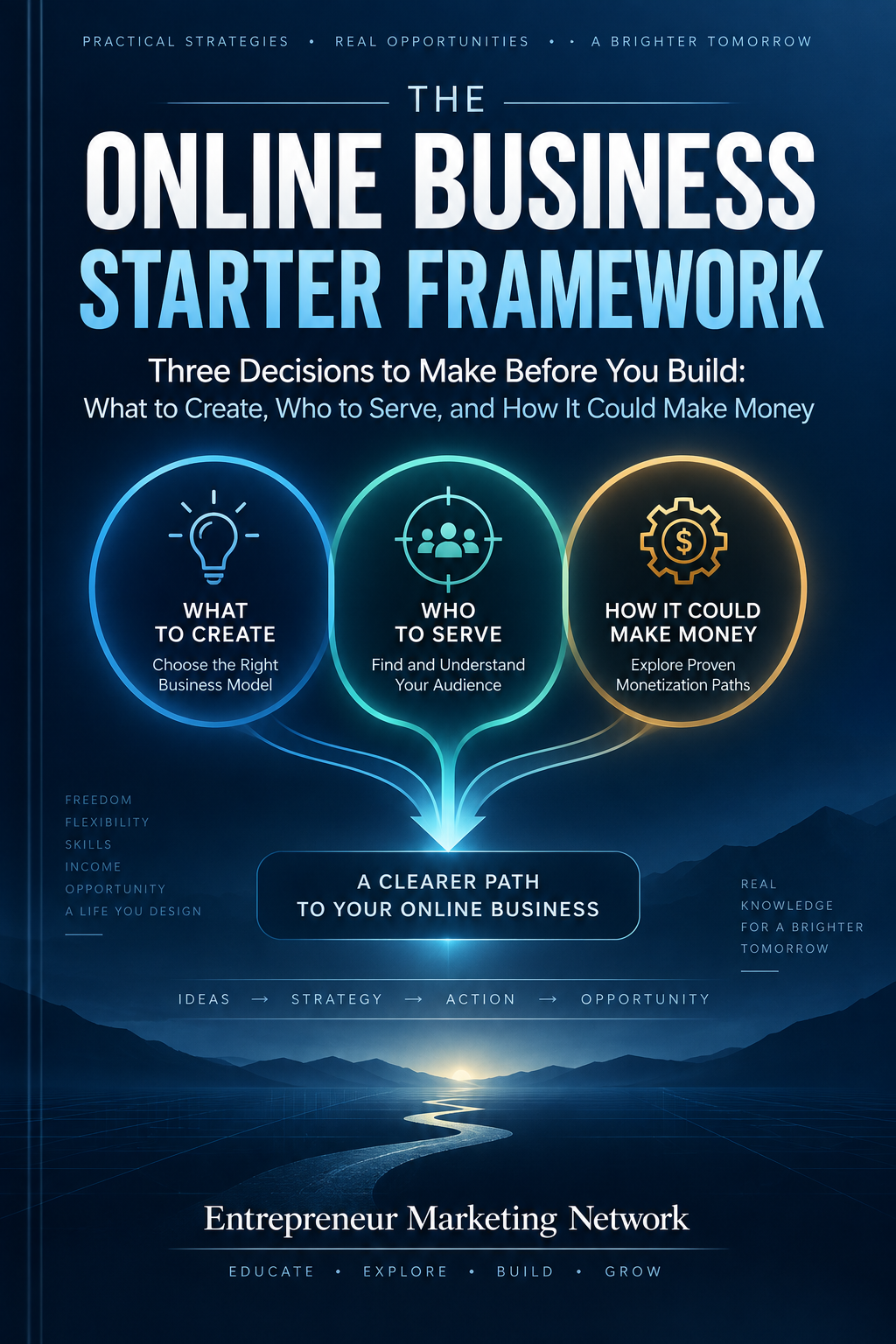
Turning a side hustle into a full-time online home-based business is a dream for many entrepreneurs…
How To Choose A Side Hustle That Fits Your Schedule

Choosing a side hustle that fits your schedule starts with a simple question: what kind of work can you realistically repeat within the time, energy, and attention you already have available? A side hustle may sound appealing on paper, but if its normal workload conflicts with your job, family responsibilities, or recovery time, even a promising idea can become difficult to maintain.
The goal is not simply to find something you could squeeze into your week. It is to choose something whose normal operating rhythm has a reasonable place in your life.
That distinction matters because side hustles are often compared by income potential, startup cost, or popularity while one of the most practical factors gets overlooked: when the work actually has to happen.
Available Hours Do Not Tell the Whole Story
Suppose you believe you have eight hours a week for a side hustle. That number sounds useful, but it does not tell you whether those hours match the work.
Eight flexible hours spread across several evenings are very different from one uninterrupted eight-hour block on Saturday.
A side hustle built around writing, design, research, affiliate publishing, or certain administrative services may allow work to be completed in smaller blocks. A service that depends on appointments, customer availability, deliveries, live meetings, events, or travel may require larger blocks at particular times.
That means two business ideas requiring roughly the same amount of total effort can fit the same person’s life very differently.
The better question is not only, “How many hours do I have?”
It is also, “What kind of hours do I actually have?”
Pay Attention to Fixed Work and Flexible Work
One useful distinction is whether the side hustle creates fixed commitments or flexible tasks.
Fixed commitments must happen at a particular time. Client appointments, tutoring sessions, scheduled consultations, event work, and some local services are examples.
Flexible tasks usually give you more control over when the work is completed. Writing an article, preparing a digital product, editing a video, updating a website, researching a topic, or completing certain freelance projects may offer more scheduling flexibility.
Neither model is automatically better.
Someone with predictable evenings might be comfortable accepting scheduled appointments. Someone whose primary job regularly runs late may find those same appointments stressful, even if the business itself is attractive.
Flexibility therefore has value beyond convenience. It can determine whether you can reliably fulfill what customers expect.
Consider Energy, Not Just Empty Calendar Space
A technically open hour is not always a useful working hour.
If your primary job requires intense concentration all day, a side hustle that demands several more hours of detailed analytical work every evening may be harder to sustain than your calendar suggests.
Someone who spends the workday interacting with customers might prefer independent evening work. Someone with a physically demanding job may prefer a side business that can be operated from a desk.
This does not mean you need to avoid challenging work. It means your side hustle should be evaluated against the energy your existing responsibilities normally consume.
A plan that assumes you will consistently perform your most demanding work during your most exhausted part of the day may create problems even when the time appears available.
The Hidden Workload Can Change the Decision
Side hustles are often described by their most visible activity.
Freelancing sounds like completing projects. Selling products sounds like making or sourcing products. Consulting sounds like working with clients. Content publishing sounds like creating content.
But the visible work is rarely the entire workload.
Depending on the business, you may also need time for customer communication, marketing, scheduling, bookkeeping, preparation, revisions, research, delivery, inventory, follow-up, maintenance, or learning unfamiliar tools.
A service that appears to require three hours for a customer project might also require preparation before the project and communication afterward. A product-based side hustle may involve packaging and fulfillment in addition to creating the product. A content-based business may require editing and publishing after the initial content is produced.
These activities do not make the opportunity unsuitable. They simply belong in the schedule calculation.
Evaluating only the headline activity can make a side hustle look considerably easier to fit into your week than it really is.
Startup Work and Ongoing Work Are Different
Another source of confusion is assuming that the effort required to start a side hustle is the same as the effort required to operate it.
Launching may temporarily require more work.
You might need to create an initial offer, establish a simple website, prepare samples, organize a workspace, learn a tool, or develop basic marketing materials. Some of those tasks may not need to be repeated frequently.
Other activities become recurring responsibilities.
Customer service, fulfillment, content creation, lead generation, client delivery, administration, and maintenance can continue for as long as the business operates.
When considering an idea, separate those two workloads.
A demanding setup period may be manageable if the ongoing business fits your schedule afterward. Conversely, an idea with a simple launch can still become difficult if its recurring obligations require more time than you can consistently provide.
A Smaller Version Can Reveal Whether the Fit Is Real
You do not necessarily need to build the full version of an idea before learning whether its workload fits your life.
A limited test can reveal useful information.
A freelancer might take on one manageable project before trying to maintain several clients. Someone considering a product business might prepare a small batch before creating a larger inventory. A person interested in publishing could attempt a modest, repeatable content schedule before committing to an ambitious production calendar.
The purpose is not to predict future business results from a tiny experiment.
It is to observe the work itself.
How long did the tasks really take? Which parts required uninterrupted attention? Which responsibilities appeared that you had not considered? Could the process reasonably be repeated alongside your existing obligations?
That information can be more useful than estimating the workload from a description of the business model.
Beware of Choosing Around Your Best Week
One unusually productive week can create misleading expectations.
You may occasionally have a free Saturday, several quiet evenings, or a period when other responsibilities are unusually light. Building a side hustle around that temporary availability can make normal weeks feel like constant catch-up.
A more practical approach is to think about an ordinary week.
Your schedule does not need to be perfectly predictable. But if the side hustle can function only when everything else goes smoothly, it may be operating with too little margin.
Some flexibility also helps when customers need attention, a project takes longer than expected, or personal responsibilities change unexpectedly.
The objective is not to eliminate scheduling pressure completely. It is to avoid creating a business that depends on permanently operating at maximum capacity.
Questions That Can Expose a Scheduling Mismatch
Before committing more time or money to a side-hustle idea, consider a few practical questions:
- Does the work need to happen at specific times, or can I choose when to complete it?
- Do I have enough uninterrupted time for the most demanding tasks?
- What recurring work exists beyond the main product or service?
- Does the business depend on customers being available when I am normally unavailable?
- Could I maintain a smaller version of this routine during an ordinary week?
- What happens to the business when my primary responsibilities temporarily become busier?
These questions will not tell you whether a side hustle will succeed financially. Demand, skills, positioning, offer quality, competition, execution, expenses, consistency, and other factors can also affect results.
They can, however, help determine whether you are choosing a business you have a realistic opportunity to operate consistently.
A Good Opportunity Can Still Be a Poor Fit Right Now
One of the most useful distinctions is between a bad business idea and an idea that does not fit your current circumstances.
An opportunity might have qualities you like but require daytime appointments you cannot accept. Another might require frequent weekend work when weekends are already committed. A third might fit your long-term interests but demand more recurring production than you currently want to take on.
Recognizing that mismatch does not mean the idea has no value.
It may mean you need a smaller version, a different delivery method, a more flexible model, or a different opportunity for now.
That perspective can also reduce unnecessary strategy switching. Instead of repeatedly abandoning ideas because they become difficult to maintain, you can evaluate workload fit before making a large commitment.
Choose for Repeatability, Not Just Possibility
A side hustle fits your schedule when its normal responsibilities can coexist reasonably with the rest of your life—not merely when you can imagine finding enough hours to start it.
Look at when the work must happen, how much concentration it requires, what recurring tasks sit behind the visible activity, and whether the routine still makes sense during a typical week.
You do not need the business with the fewest responsibilities or the most flexible schedule. You need one whose demands match the capacity you can realistically give it.
That makes schedule fit less about finding spare time and more about choosing work you have a reasonable chance of repeating.

More to Explore